Recruitment
Finding Future Leaders
Recruiting and employing our students and graduates
Many of our students in Computer Science are recruited before they graduate by working for an employer on a fixed-term contract, either part-time, full-time and as summer interns or for a year long placement with Industrial Experience (IE). This page describes some of the options for recruiting and employing students from the Department of Computer Science, as well as those studying other degree programs at the University of Manchester.
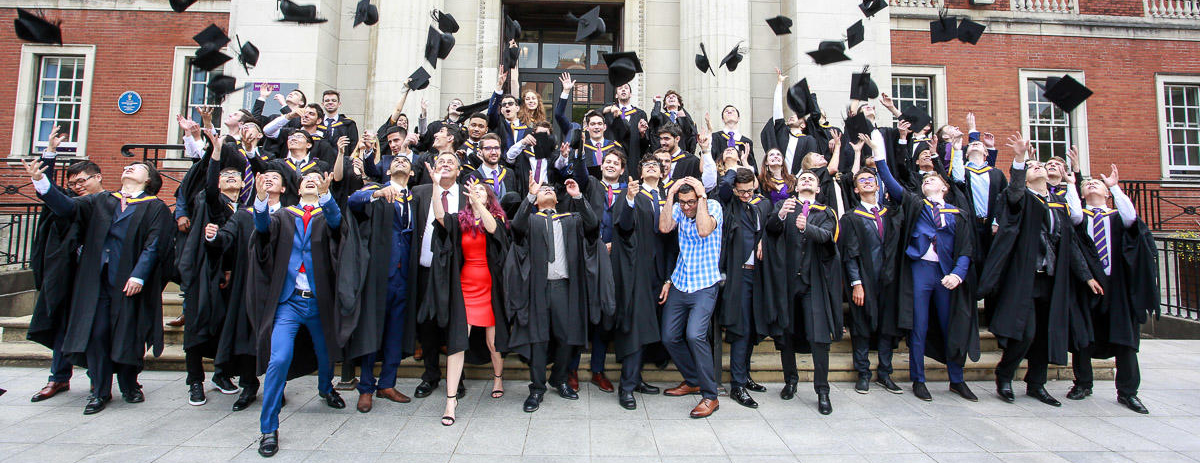
About our students
We are one of the biggest departments of Computer Science in the Russell Group of Universities and home to large community of active students. As of 2026 we have over 1000 undergraduate students studying one of two main Bachelors degrees:
- BSc (Hons) Computer Science
- BSc (Hons) Computer Science with Mathematics
Both degree programmes are available with Industrial Experience (IE), a year in industry. Alongside our undergraduate community we currently have:
- Over 240 postgraduate taught students, doing Masters degrees
- Over 240 PhD students doing research supervised by academics in the Department
As of 2026, the entry tariff for our undergraduate students is A* A* A including an A* in Mathematics, and a minimum of one science subject from Computer Science, Further Mathematics, Biology, Chemistry or Physics or equivalent qualifications from outside the UK. We typically have around ~300 undergraduate students graduating annually, alongside around ~240 Masters and ~70 PhD students graduating every year.
Engage early, engage often
Recruiting students and graduates is a bit like software engineering. Similar to the practice of release early, release often, we recommend that employers engage early and engage often with students. There are at least three routes for doing this:
- Targeting specific degree programmes like Computer Science
- Targeting any degree programmes e.g. STEM or other degrees via various mechanisms
- Participating in events and careers fairs organised by the Department of Computer Science or Careers service
These are described in more detail below:
The Wednesday Waggle for Computing and AI
With a student population of over 40,000 students enrolled on over 1,000 different degree programmes, it is very easy for opportunities from employers to get lost in the blizzard of information overload on teaching, student events, careers service support and corporate communication from the University. To help our students navigate this space, we highlight events and vacancies in a tailored weekly jobs newsletter for Computing and AI, called the Wednesday Waggle see waggle.cs.manchester.ac.uk shown in Figure 1

The Wednesday Waggle newsletter gets emailed out to 1000+ Bachelors and 240+ Masters students in Computer Science each week on Wednesdays during term-time. The Wednesday Waggle does not replace the all of sources that students can use to find career opportunities, but summarises key vacancies and events in a handy weekly digest for busy time-poor students of Computing. If you would like us to highlight something in the Wednesday Waggle, see the form at waggle.cs.manchester.ac.uk
Recruiting from other degree programmes
If you’re recruiting beyond Computing and AI, we recommend you contact:
- The central careers service which serves all 40,000 students of the University at www.careers.manchester.ac.uk
- Discipline employability and placement leads for the relevant subject, see contacts
Employers can advertise vacancies and events across the whole University for free via careerconnect.manchester.ac.uk, for details see employers.manchester.ac.uk
Each department has an employability lead with responsibility for liaising with industrial partners relevant to their students degree programs. As an academic, the employability will have direct access to those students through their teaching and research.
Employing students before they graduate
There are several models for of employing students before they graduate. These include part-time, full-time, term-time, summer-time or as a year long placement students during a “sandwich” year in industry.
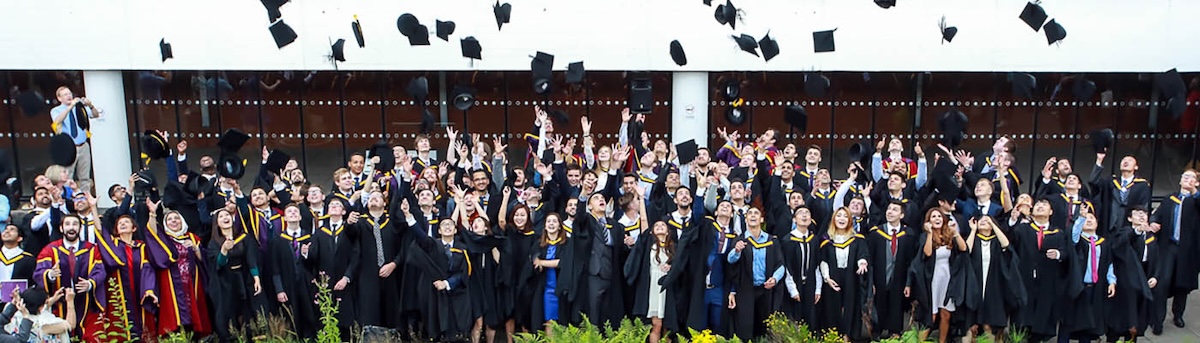
Industrial Experience Year
Around a third of our undergraduate students are successful in securing an industrial experience (IE) year in industry before graduation. This is one of the most popular ways to recruit students with around 50% of placement students returning to their placement providere for a full-time graduate role when they graduate.
Summer internships for Computer Scientists
As well as year long placements, a significant proportion of our students are employed on full-time contracts over a summer for anything between 4-12 weeks, starting early June and finishing early September. As summer internships are not part of a specific degree program, so they do not need to be approved by the University although they do need to be paid.
Many of our students do summer internships between their first and second, or second and final year of study. We encourage all our students to take skilled work during summer if they can and highlight key internships for students in the Wednesday Waggle and elsewhere.
Summer internships tend to start in June (after exams) and last anything between 4-12 weeks.
Part-time work for Computer Scientists
Some students choose to work part-time during term-time for an hourly rate of pay, provided they can balance their study and employment commitments. Casual or zero-hours contracts are one way to facilitate this, provided that employers realise that during term-time, a students top priority should be study, not employment.
An example of part-time employment on casual contracts is Imago, our student software company imago.cs.manchester.ac.uk. Other employers have employed our students part-time on similar contracts as well.
Engaging directly with students through societies and clubs
The University of Manchester Students Union (UMSU) is the largest in the UK with over 600 student societies and clubs.
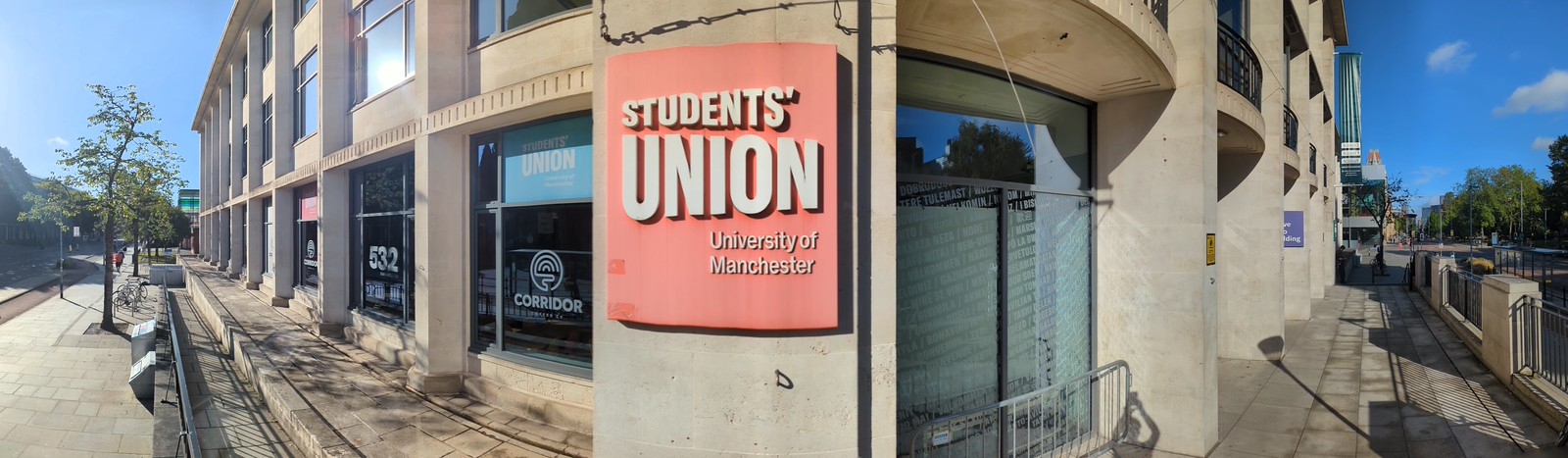
Many student societies have a scientific, technical, engineering or mathematical interests, a small sample is shown, in no particular order in Table 1
| Student society | Link |
|---|---|
| Women in Science & Engineering | manchesterwise |
| Startups | accelerateme.co |
| UNIversity Computer Science | unicsmcr.com |
| Manchester University Data Science & Artificial Intelligence | mudsai.com |
| IBM Z society | IBMZ.uom |
| Maths Society | MathSoc |
| 180 degrees consulting | 180dc.org |
| MancheSTAR fusion | manchestar-fusion.co.uk |
| Manchester Students for the Exploration and Development of Space | linkedin.com/company/manseds |
| Manchester Intelligence Society (Cybersecurity) | MIS |
| Robosoc | uom-robosoc.com |
| Manchester Trading and Investment Society | MUTIS |
| Hyperloop Manchester | hyperloopmanchester.co.uk |
| Makerspace Manchester | makerspacemanchester.org |
| Manchester Stinger Motorports | formulastudentuom.com |
| Google Developers Group (GDG) Manchester | GDGManchester |
| … and the rest | manchesterstudentsunion.com/activities |
A good way to engage with students is to sponsor and support their events by contacting relevant societies directly. This includes sponsoring hackathons and offering speakers for talks, panels, workshops, insights and other events.
Employing Computer Science graduates
Finally, there is graduate employment, either through graduate schemes or a graduate jobs. (Network 2026) The Higher Education Statistics Agency (HESA) collects data from UK graduates 15 months after they have graduated via the annual graduate outcomes survey. (HESA 2025a) Key data from this national survey is summarised in Table 2. According to this data, the average Computer Science graduate salary 15 months after graduation from the University of Manchester is £40k, although there are significant variations by sector and location.
discoveruni.gov.uk where \(n\) is the number of students who answered a given question via the graduate outcomes survey, not the number of students on the course. Data is based on students graduating in 2022, who were surveyed 15 months after they graduated in 2023/4 with HESA publishing this data in July 2025. 🎓
| Degree | Students in work or study | Students in highly skilled employment | Salary after 15 months |
|---|---|---|---|
| BSc Computer Science, 3 year, University of Manchester (HESA 2025b) | 85% (\(n\)=40) | 75% (\(n\)=30) | £40k (\(n\)=45) |
| BSc Computer Science with IE, 4 year, University of Manchester (HESA 2025c) | 91% (\(n\)=75) | 85% (\(n\)=60) | £40k (\(n\)=45) |
| BSc Computer Science, University of Anywhere, UK | ? |
? |
£32k (\(n\)=6420) |
| Bachelors degree, University of Anywhere, UK | 88% (\(n\)=358,045) (HESA 2025a) | ? |
£28.5k (\(n\)=358,045) |